Control-grade pheromone dispensers that saturate the crop canopy with synthetic sex pheromone — males can't find females, mating collapses, and the next generation never happens. Recognized by regulators as among the most environmentally friendly pest control methods: non-toxic, residue-free and species-specific.
By Target Pest
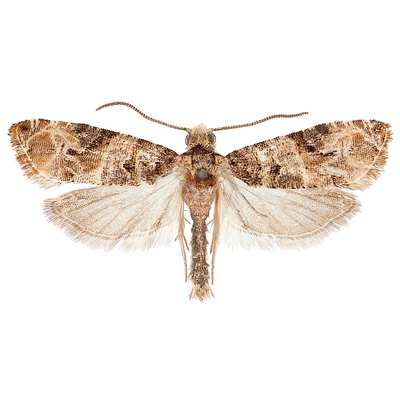
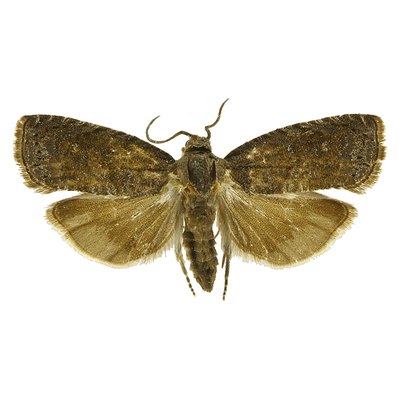
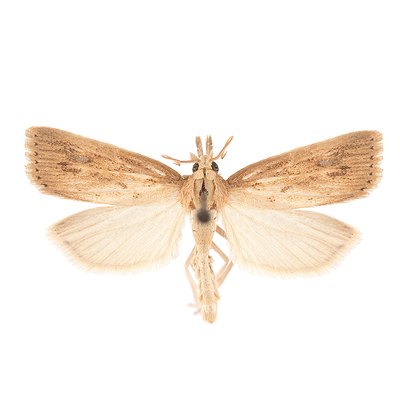
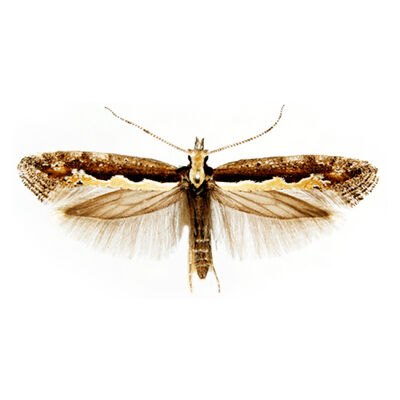
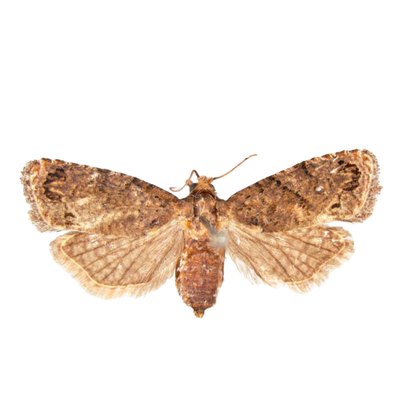
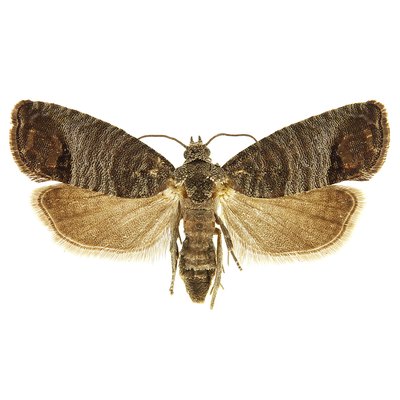
Each dispenser carries the species-specific pheromone blend of its target moth — shown here as collected specimens.
| Target Pest | Crop | Dispenser Type | Field Persistence |
|---|---|---|---|
| Cydia pomonella — Codling moth | Apple, pear, walnut | Rope / wafer | 90–120 days* |
| Grapholita molesta — Oriental fruit moth | Peach, pear | Rope | 90–120 days* |
| Lobesia botrana — European grapevine moth | Grape | Wafer / rope | 90–120 days* |
| Plutella xylostella — Diamondback moth | Brassica vegetables | Wafer | 60–90 days* |
| Chilo suppressalis — Striped rice stem borer | Rice | Wafer | Season-long* |
| Thaumatotibia leucotreta — False codling moth | Citrus, fruit | Rope | 90–120 days* |
*Typical values; exact release profile and density per datasheet. Loading and dispenser matrix customized per region and crop system.
Deployment
≥10 ha contiguous area, low-to-moderate pest pressure, known flight window.
Distribute dispensers evenly through the canopy before first flight.
Keep monitoring lures inside the block — captures should fall to zero (trap shutdown).
Assess damage and next-generation pressure; adjust density for the following cycle.
Full methodology: How Does Mating Disruption Work? →
FAQ
Dispensers release a synthetic copy of the female sex pheromone at concentrations that mask natural plumes. Males follow false trails and never locate calling females; mating is disrupted and populations decline generation by generation. Crucially, insects cannot develop resistance to it, and non-target species — including pollinators — are unaffected.
Contiguous blocks of at least ~10 hectares; larger is better. At high pest density, an initial knockdown spray is often recommended before starting the MD program.
Pheromone-based mating disruption is widely permitted in organic systems (e.g., OMRI-listed products in the US) because it is non-toxic and leaves no residue. Registration status varies by country — our team confirms requirements per destination market.